
Home » Our Education » Teaching & Learning
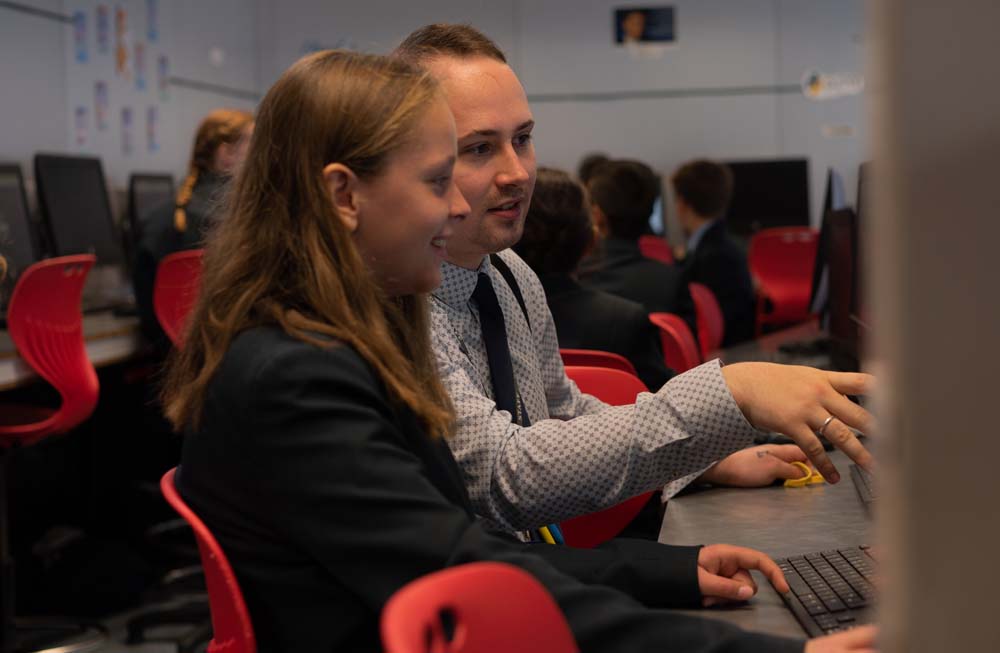
Teaching and learning at Seaford Head School is about ensuring that teachers and students can achieve excellence together.
At Seaford Head we believe that excellent teaching is key to supporting student progress and providing them with the opportunity to fulfil their potential.
We are very fortunate to have a team of excellent teachers and a student body that works incredibly hard with their learning on a day-to-day basis. This combination leads to fantastic results which support the opportunities for our students at Seaford Head.
In November of 2023 we were visited by Ofsted where we received a glowing report and over the two days, the inspectors had the opportunity to visit our students within their lessons. The inspectors were incredibly impressed with the teaching and learning that they witnessed, with the lead inspector commenting on how engaged our students were and the positive relationships that were evident between our teachers and their students.
So how do we support and develop Teaching and Learning at Seaford Head?
There are a number of ways that we try to ensure that Teaching and Learning is at its strongest within the school.
At Seaford Head we have 6 Teaching and Learning Principles that we focus on, namely: Student understanding of the curriculum, Active Engagement, Quality of Feedback, Catering for the needs of all students, Literacy and lifelong learning and Teacher explanation.
It is important that for the Teaching and Learning Principles to be effective, that teachers are provided with opportunities to further develop their practice.
Our evidence-informed approach to teaching and learning helps us identify what works best in the classroom. This is supported by our effective quality assurance programme that is evident throughout the academic year.
Our comprehensive professional development programme is fluid in its nature supporting the coaching programme and responding to areas of development highlighted. The Continued Professional Development group facilitate this, focussing on deliberate practice and research-informed guidance offering a variety of pedagogical strategies within our 6 Teaching and Learning Principles that provide focussed sessions within a CPD programme for other staff members, and provide teachers with the potential to develop individually and to share excellent practice.
The school also has Instructional Coaches within the teaching staff, who facilitate a coaching model alongside the CPD programme to further develop individual teachers and improve Teaching and Learning across the school.
There is a strong academic and collaborative professional development culture between staff involving sharing of best practice and support of one another. Every week on a Monday, briefings occur where effective practice is shared with a focus on developing staff and providing the very best for our students. There is also a Trio Coaching Programme that involves teaching staff focusing on an area of pedagogy they wish to improve and being supported in that through group coaching lead by our Instructional Coach, facilitated by high-quality materials from the WALKTHRU website.
There is a clear emphasis on Adaptive Teaching within our lessons that is evidenced within the strategies apparent within our Teaching and Learning Principles, also considering Rosenshine’s 10 Principles as a strand throughout.
Together with the focus on Teaching and Learning within the classroom, there are also the standards set with our expectations regarding behaviour for learning. This provides a clear structure at the start of the lesson with students entering quietly and undertaking a learning task straight away. This is further supported with high standards of behaviour throughout the lesson in line with the behaviour policy. The end of the lesson sees students leaving in an organised and calm manor, ready for the rest of their day.
Student voice is undertaken throughout the year and the student voice continues to support the development of Teaching and Learning at our school.
As a result of this investment, teaching and learning at Seaford Head School is very strong, but we are never complacent and we find ourselves continually striving to innovate and improve.


| Cookie | Duration | Description |
|---|---|---|
| cookielawinfo-checkbox-advertisement | 1 year | Set by the GDPR Cookie Consent plugin, this cookie is used to record the user consent for the cookies in the "Advertisement" category . |
| cookielawinfo-checkbox-analytics | 11 months | This cookie is set by GDPR Cookie Consent plugin. The cookie is used to store the user consent for the cookies in the category "Analytics". |
| cookielawinfo-checkbox-functional | 11 months | The cookie is set by GDPR cookie consent to record the user consent for the cookies in the category "Functional". |
| cookielawinfo-checkbox-necessary | 11 months | This cookie is set by GDPR Cookie Consent plugin. The cookies is used to store the user consent for the cookies in the category "Necessary". |
| cookielawinfo-checkbox-others | 11 months | This cookie is set by GDPR Cookie Consent plugin. The cookie is used to store the user consent for the cookies in the category "Other. |
| cookielawinfo-checkbox-performance | 11 months | This cookie is set by GDPR Cookie Consent plugin. The cookie is used to store the user consent for the cookies in the category "Performance". |
| CookieLawInfoConsent | 1 year | Records the default button state of the corresponding category & the status of CCPA. It works only in coordination with the primary cookie. |
| elementor | never | This cookie is used by the website's WordPress theme. It allows the website owner to implement or change the website's content in real-time. |
| viewed_cookie_policy | 11 months | The cookie is set by the GDPR Cookie Consent plugin and is used to store whether or not user has consented to the use of cookies. It does not store any personal data. |
| Cookie | Duration | Description |
|---|---|---|
| _ga | session | The _ga cookie, installed by Google Analytics, calculates visitor, session and campaign data and also keeps track of site usage for the site's analytics report. The cookie stores information anonymously and assigns a randomly generated number to recognize unique visitors. |
| _ga_MFRX97YTRD | session | This cookie is installed by Google Analytics. |
| CONSENT | 2 years | YouTube sets this cookie via embedded youtube-videos and registers anonymous statistical data. |
| Cookie | Duration | Description |
|---|---|---|
| VISITOR_INFO1_LIVE | 5 months 27 days | A cookie set by YouTube to measure bandwidth that determines whether the user gets the new or old player interface. |
| YSC | session | YSC cookie is set by Youtube and is used to track the views of embedded videos on Youtube pages. |
| yt-remote-connected-devices | never | YouTube sets this cookie to store the video preferences of the user using embedded YouTube video. |
| yt-remote-device-id | never | YouTube sets this cookie to store the video preferences of the user using embedded YouTube video. |
